
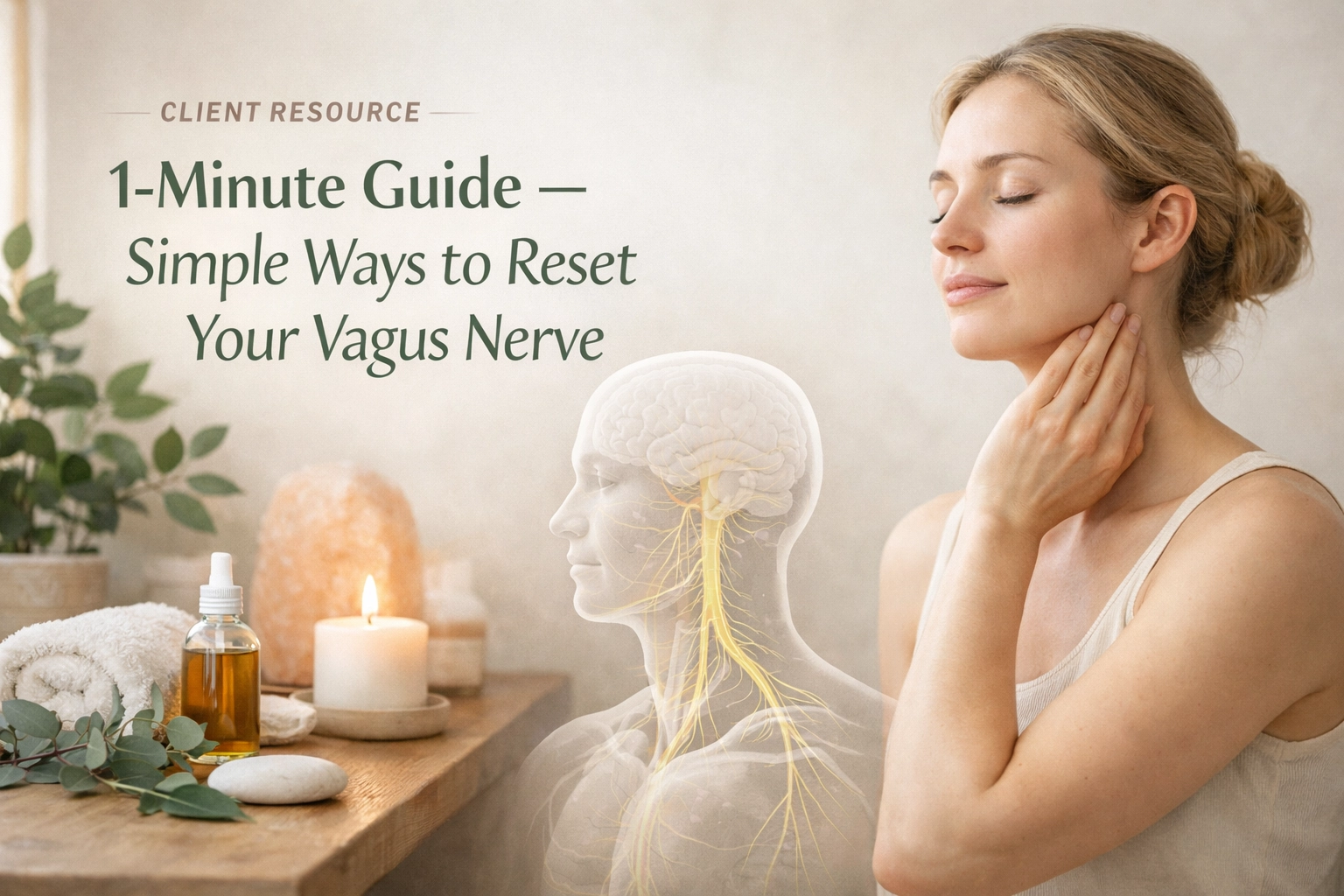
Chronic fatigue is rarely a simple issue of "not getting enough sleep." For many of our patients in Collierville, Germantown, and Memphis, the root cause of persistent exhaustion lies within the autonomic nervous system (the system that controls involuntary body functions). Specifically, the vagus nerve often becomes "stuck" in a state of high stress or shut down. This 1-minute guide provides immediate, actionable tools to reset this vital nerve and transition your body from "fight or flight" into "rest and digest" mode.
The vagus nerve (also known as the tenth cranial nerve) is the longest nerve in your body. it acts as a two-way communication highway between your brain and your internal organs, including the heart, lungs, and digestive tract. When the vagus nerve is functioning correctly, a state known as high vagal tone, your body can easily recover from stress. When vagal tone is low, you may experience chronic inflammation, poor digestion, and the debilitating brain fog associated with chronic fatigue syndrome.
If you only have sixty seconds, choose one of the following techniques to stimulate the parasympathetic nervous system (the branch of the nervous system responsible for relaxation and recovery).

To understand why these simple physical actions have such a profound impact on your energy levels, we must look at the anatomy of the vagus nerve.
Breathing is the only autonomic function you can consciously control. When you inhale, your sympathetic nervous system (the "gas pedal") slightly increases your heart rate. When you exhale, the vagus nerve secretes acetylcholine (a neurotransmitter that slows the heart rate). By making your exhale significantly longer than your inhale, you are manually forcing your nervous system to prioritize the "brake" over the "gas." For our patients in Arlington and Memphis struggling with anxiety-induced fatigue, this is the most effective immediate intervention.
Cold exposure triggers an ancient biological response known as the Mammalian Dive Reflex. When your face contacts cold water, your heart rate slows down, and blood is diverted to the brain and heart. This creates an immediate "reset" for the vagus nerve. You do not need a full ice bath to achieve this; a simple splash at the sink or holding an ice pack to the side of your neck for 20 seconds is sufficient to break a stress loop.
The vagus nerve passes directly through the larynx (voice box) and pharynx (throat). Physical vibration in this area stimulates the nerve fibers. This is why humming, singing, and gargling are medically recognized methods for increasing vagal tone. Gargling is particularly effective because it requires the activation of the muscles at the back of the throat which are directly innervated by the vagus nerve. We recommend gargling until your eyes water slightly, as this indicates a strong enough contraction to stimulate the nerve.
The auricular branch of the vagus nerve supplies the skin of the ear canal and the outer ear. Research shows that manual stimulation of the ear can modulate heart rate variability (a key marker of health). By gently massaging the ear or using a small amount of pressure in the "bowl" of the ear just outside the ear canal, you send a direct signal to the brainstem to lower systemic stress.
While these 1-minute resets are excellent for daily maintenance, chronic cases often require professional intervention. At The Fatigue Clinic in Collierville, we utilize advanced biofeedback technology to help patients retrain their nervous systems.
We use a specialized acoustic mat based on the pioneering research of Dr. Bartel. This treatment is entirely non-invasive and relaxing. Unlike traditional medical interventions, there are no physical connections or wires attached to the patient. You simply lie on the mat, and specific sound frequencies are used to stimulate the body at a cellular level, promoting deep relaxation and vagal nerve regulation. This is an essential tool for patients in the Memphis area who have found that traditional medications have failed to address their root-cause exhaustion.
Traditional medical practices often overlook the nervous system's role in chronic illness. They may run standard blood tests that come back "normal," leaving the patient feeling dismissed. At The Fatigue Clinic, we recognize that a "normal" blood test does not mean you are healthy.
We serve patients across Arlington, Germantown, and Memphis by looking at the root cause of illness. Vagus nerve dysfunction is often a symptom of underlying issues such as:
By addressing the vagus nerve, we provide the body with the safety it needs to begin the actual healing process. You cannot heal a body that believes it is constantly under attack.

Consistency is more important than duration. To see lasting changes in your energy levels, we recommend the following daily schedule:
If you find that these techniques provide temporary relief but your fatigue returns quickly, it is a sign that your nervous system is "stuck" and requires a more comprehensive evaluation.
Living in a high-stress urban or suburban environment like Memphis or Germantown can keep your sympathetic nervous system on high alert. Noise pollution, traffic on the I-240, and the general pace of modern life all contribute to "Vagal Withdrawal." Using these 1-minute resets is not just a health "hack": it is a necessary survival strategy for maintaining your energy in the 21st century.
Understanding your vagus nerve is a critical part of the journey toward overcoming chronic fatigue. However, self-help tools are only one piece of the puzzle. If you are tired of feeling exhausted, "wired but tired," or mentally foggy, it is time for a professional assessment.
The Fatigue Clinic specializes in identifying the systemic failures that lead to chronic illness. Whether you are in Collierville, Arlington, or Memphis, we are here to help you reclaim your life.
Call 901-221-8621 to reserve your spot for a comprehensive evaluation!
Our team will help you determine if your vagus nerve is the primary driver of your fatigue and create a customized plan: potentially including our acoustic mat biofeedback sessions: to get you back to feeling like yourself again.

Book an evaluation at thefatigueclinic.com or call 901-221-8621 today.