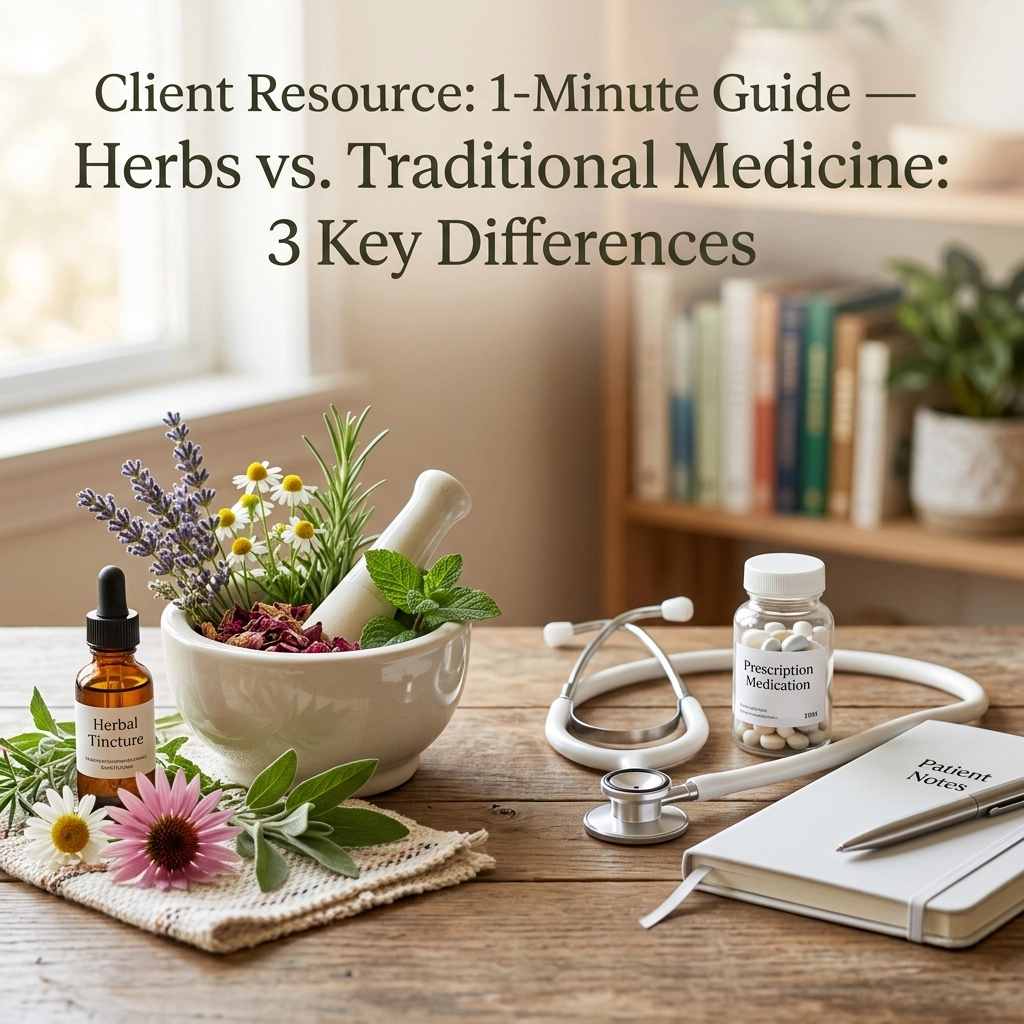
Category: Client Resources
The Fatigue Clinic (Collierville) : serving Germantown, Memphis, Arlington, and surrounding areas
Questions? Call 901-221-8621.
The simple goal
Both herbal support and traditional (pharmaceutical) medicine can be helpful. They’re just built for different jobs.
This is the quick “what’s actually different” breakdown: especially if you’re comparing options like our Touch of Herbs and Beyond line alongside conventional care.
Difference #1: Root-cause focus vs. symptom control
Traditional medicine (pharmaceuticals) is typically designed to:
- Reduce or stop symptoms fast
- Target a specific pathway (one drug → one main action)
- Be a strong fit for acute issues (infections, emergencies, severe pain, etc.)
Herbal support is often used to:
- Support the body while you work on why the problem started
- Nudge multiple systems at once (sleep, stress response, digestion, inflammation)
- Build progress in a slower, steadier way (especially with chronic fatigue patterns)
Bottom line: Pharmaceuticals commonly focus on immediate symptom control. Herbs are commonly used as part of a root-cause plan.
Difference #2: Standardized protocols vs. individualized care
Traditional medicine usually follows:
- Standard dosing based on diagnosis and guidelines
- A clearer “if X, then Y” treatment pathway
- Less flexibility when two people have the same symptom but different root causes
Herbal support is commonly chosen and adjusted based on:
- Your unique pattern (energy, sleep, gut, hormones, stress load)
- Your tolerance and sensitivity (very common in chronic fatigue patients)
- What else you’re doing (nutrition plan, labs, lifestyle, other supports)
Bottom line: Pharmaceuticals are often standardized. Herbal plans are often more personalized (especially when paired with functional-style care).
Difference #3: Single-target action vs. natural synergy with biology
Pharmaceuticals are often:
- Highly targeted
- Designed to create a predictable, specific effect
- Strong: sometimes with tradeoffs (side effects, interactions, dependency risk depending on the drug)
Herbs are often:
- Complex (many active compounds in one plant)
- Supportive of built-in biology (the body’s own regulation systems)
- Used for synergy (multiple gentle actions working together)
This is a big reason patients look at herbal lines like Touch of Herbs and Beyond: they want support that “plays nicer” with how the body already works.
Bottom line: Pharmaceuticals tend to be precise and strong. Herbs tend to be broad and supportive, often working in concert with the body.
![[IMAGE] Root Cause Discovery: Quick Facts Sheet A wooden clipboard displays a fact sheet titled 'Root Cause Discovery: Quick Facts Sheet' beside a beaker with a plant root, magnifying glass, potted plant, and ceramic mug. This arrangement visually reflects The Fatigue Clinic’s functional medicine approach, emphasizing the identification of underlying causes of illness through holistic and investigative methods.](https://cdn.marblism.com/7FmJ48taB6i.webp)
Safety note (read this)
Natural doesn’t automatically mean safe. Herbs can still:
- Interact with medications
- Affect blood pressure, blood sugar, bleeding risk, sedation, and more
- Be wrong for pregnancy, breastfeeding, surgery prep, or certain conditions
Action step: If you’re using prescriptions and herbs (including Touch of Herbs and Beyond), keep it coordinated. Call 901-221-8621 to ask what’s appropriate for your situation.
Quick “which one is for me?” checklist
Choose traditional medicine when you need:
- Fast relief
- Clear diagnosis + urgent treatment
- Strong symptom control while you stabilize
Consider herbal support when you want:
- A plan aimed at root causes
- Individualized adjustments
- Support that works with the body’s natural synergy
Want help deciding what fits your fatigue, sleep, or stress pattern? Call 901-221-8621 or visit https://thefatigueclinic.com/client-resources.
Disclaimer: This content is for general educational purposes only and is not intended to diagnose, treat, cure, or prevent any medical condition. It is not a substitute for individual medical advice; always consult your own healthcare provider about your health and before making any changes to your care. Statements about herbal products have not been evaluated by the Food and Drug Administration and are not intended to diagnose, treat, cure, or prevent any disease.