
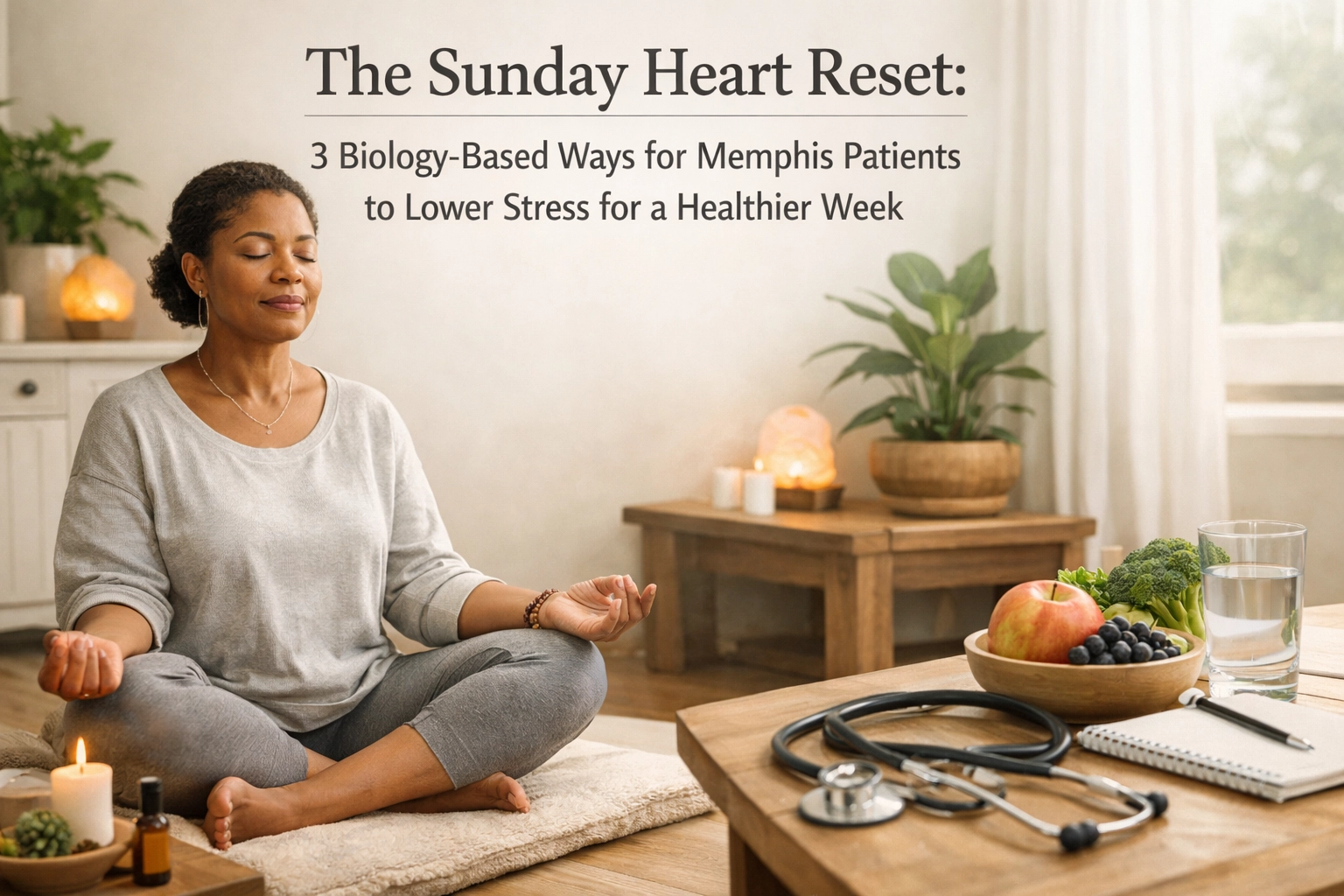
Sundays in the Mid-South should feel like a gift: a chance to reset before the week kicks back in. But for many Memphis-area patients, Sunday evenings bring something else entirely: that familiar creep of anxiety, the tightness in your chest, the racing thoughts about Monday's to-do list.
Here's what most people don't realize: that Sunday stress isn't just in your head. It's happening in your heart.
Your nervous system and cardiovascular health are deeply intertwined. When chronic stress keeps your body in fight-or-flight mode, your heart pays the price: elevated blood pressure, increased heart rate, and higher cortisol levels that damage blood vessels over time. The good news? You can interrupt this cycle with three simple, biology-based strategies that take less than an hour.
At The Fatigue Clinic in Collierville, we serve patients throughout Germantown, Memphis, Arlington, and surrounding areas who are tired of feeling tired: and tired of stress controlling their health. These aren't just feel-good tips. They're rooted in how your body actually works.
Before we jump into solutions, let's talk about what's happening inside your body when Sunday anxiety strikes.
Your autonomic nervous system has two main branches: the sympathetic (fight-or-flight) and the parasympathetic (rest-and-digest). Chronic stress keeps you locked in sympathetic mode: your heart rate stays elevated, your blood pressure climbs, and stress hormones like cortisol flood your system.
Over time, this pattern damages your cardiovascular system. Studies show that people with chronic stress have a 69% higher risk of heart attack and significantly elevated risk of stroke and arrhythmias. That Sunday evening tension you feel? It's not just unpleasant: it's inflammatory.

The solution isn't complicated medication or endless therapy sessions. It's about activating your body's natural relaxation response through targeted, evidence-based practices that calm your nervous system and protect your heart.
Physical movement is one of the fastest ways to regulate stress neurotransmitters in your brain: specifically serotonin and dopamine, the chemicals that directly improve your mood and lower anxiety.
You don't need to run a 5K or hit the gym for an hour. Research shows that just 10 minutes of walking is enough to shift your nervous system from stress mode to recovery mode. The key is getting outside and moving your body consistently.
Why Shelby Farms or local parks work so well:
Here's your Sunday protocol:
Start your walk around 4 PM or 5 PM: right when Sunday anxiety typically peaks. Choose a location close to home: Shelby Farms Park, Germantown Greenway, W.C. Johnson Park in Collierville, or any green space in your neighborhood. Walk at a comfortable pace for 10 minutes. Don't check your phone. Just walk, breathe, and notice your surroundings.
This isn't about exercise intensity. It's about interrupting the stress cascade before it hijacks your evening and sets a negative tone for Monday. Your heart rate will naturally lower. Your breathing will deepen. Your mind will quiet down.
Do this every Sunday: even when you don't feel stressed. Prevention is more powerful than intervention.

Heart Rate Variability (HRV) is one of the most reliable indicators of nervous system health and stress resilience. It measures the variation in time between each heartbeat: and higher variability is a good thing. It means your body can easily shift between stress and recovery modes.
Many Memphis patients at our clinic track their HRV using simple smartphone apps or wearable devices. It takes 60 seconds and gives you real-time feedback about your stress levels. If your HRV is low on Sunday afternoon, it's a clear signal that your body needs recovery.
The fastest intervention? The 4-7-8 breathing technique.
This method directly activates your parasympathetic nervous system: the branch responsible for relaxation and heart protection. It slows your heart rate, lowers blood pressure, and reduces cortisol within minutes.
How to practice 4-7-8 breathing:
That's it. Four breath cycles. Less than two minutes. But the physiological impact is profound: you're literally telling your nervous system to shift gears from stress to calm.
Do this before your Sunday evening meal or right after your walk. You can even do it in your car before heading home from errands. The beauty of this technique is its portability. You always have your breath with you.
Sunday stress often stems from feeling unprepared for the week. Planning just one heart-healthy meal gives you a sense of control while directly supporting your cardiovascular system.
This isn't about complicated recipes or expensive ingredients. Focus on anti-inflammatory foods that protect your heart and stabilize blood sugar: which directly impacts mood and energy.
Your Sunday meal-planning checklist:
Choose one dinner for the upcoming week that includes:
Write down the meal. Make your grocery list. Prep what you can on Sunday evening: wash the greens, cook the grains, portion the protein.
This single act reduces decision fatigue during the week and ensures you have at least one solid, heart-protective meal ready to go. It's practical. It's actionable. And it takes the pressure off Monday evening when you're tired from work.
Bonus: Cooking itself can be meditative. The repetitive motions, the focus on something tangible, the sensory experience: it all helps calm your nervous system.

These three strategies aren't random wellness advice. They're targeted interventions based on how stress damages your cardiovascular system: and how simple practices can reverse that damage.
When you walk in nature, practice deep breathing, and nourish your body with real food, you're:
This is preventive cardiology. It's functional medicine. And it works: especially when practiced consistently, not just when you're already overwhelmed.
Sunday stress management is essential. But if you're dealing with chronic anxiety, fatigue, or concern about your heart health, you need objective data about what's happening inside your body.
The Cardiac Calcium Score is a non-invasive CT scan that measures calcium buildup in your coronary arteries: one of the earliest indicators of heart disease. Most people don't get this test until after symptoms appear, but early detection can literally save your life.
We're offering this scan for $75 at The Fatigue Clinic in Collierville: a fraction of the typical cost. This test gives you and your doctor critical information about your cardiovascular risk, especially if stress has been a chronic issue.
Combine this objective assessment with a stress management consultation, and you'll have a comprehensive plan for protecting your heart while finally breaking the cycle of Sunday anxiety and weekly burnout.
Call 901-221-8621 to schedule your Cardiac Calcium Score and discuss personalized stress management strategies. Our team serves patients throughout Germantown, Memphis, Arlington, Collierville, and surrounding communities who are ready to take control of their heart health before problems develop.
Start this Sunday with your 10-minute walk, your 4-7-8 breathing practice, and your meal planning session. Track how you feel Monday morning. Notice the difference in your energy, your mood, and that tightness in your chest.
Your heart will thank you. Your nervous system will thank you. And by the time Sunday rolls around again, you'll have a biology-based routine that actually works: not just another wellness tip that sounds good but delivers nothing.
The Fatigue Clinic is located in Collierville and serves patients throughout Germantown, Memphis, Arlington, and the Mid-South. Visit us at designvista.serverhatch.com/thefatigueclinic/ or call 901-221-8621 to discuss how functional medicine and preventive cardiology can transform your health( one Sunday at a time.)