
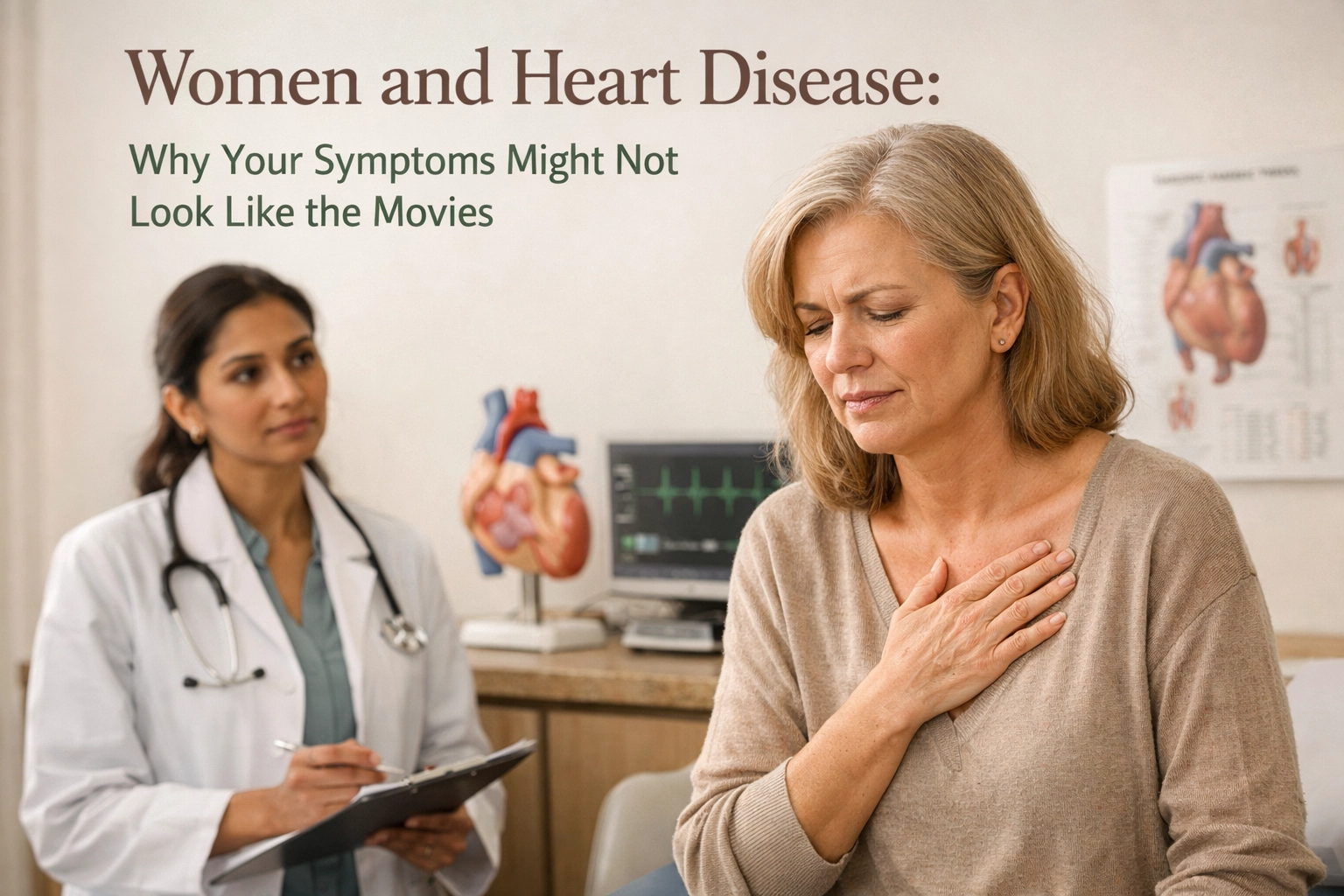
You’ve seen the scene a hundred times. Man clutches his chest. Pain radiates down his left arm. He collapses. Cut to credits.
Here’s the problem: That’s not how heart attacks look for most women. And this Hollywood stereotype is literally killing us.
Heart disease is the number one killer of women in America, more deadly than all cancers combined. Yet most women don’t recognize their symptoms because they don’t match what we’ve been taught to expect.
After 40 years in cardiovascular medicine, including extensive work in the cath lab and rounding on cardiac patients, our CEO Susan Earl has seen this pattern play out too many times. Women come in days or even weeks after their heart attack, thinking they had the flu or just needed to rest. By then, significant damage has already occurred.
It’s time we had an honest conversation about what heart disease actually looks like in women’s bodies.
The classic heart attack scene reflects male physiology, not female. Men typically experience that dramatic, crushing chest pain that sends them straight to the ER. Women? Not so much.
Women are far more likely to experience subtle, easily dismissed symptoms that seem completely unrelated to their hearts. These “atypical” symptoms (a term that’s frankly insulting since they’re typical for half the population) often get written off as stress, anxiety, indigestion, or just “being tired.”
This diagnostic delay is deadly. The longer you wait to get treatment, the more heart muscle dies. And dead heart muscle doesn’t come back.

Here’s what to watch for, and these symptoms deserve immediate medical attention:
Extreme, unexplained fatigue. We’re not talking about normal tired. This is the kind of exhaustion where climbing stairs feels like running a marathon. Where you can’t catch your breath doing routine tasks. Many women report crushing fatigue in the days or weeks leading up to a heart attack.
Jaw pain, neck pain, or back pain. Your heart doesn’t necessarily hurt where your heart is. Cardiac pain can radiate to your jaw, shoulders, upper back, or between your shoulder blades. If you’re experiencing unexplained pain in these areas, especially with exertion, don’t dismiss it.
Indigestion or nausea. That “heartburn” might actually be your heart. Many women describe pressure in their upper abdomen or chest that feels like severe indigestion or GERD. Some experience nausea or vomiting.
Shortness of breath. Especially if it comes on suddenly or occurs without chest discomfort. Women often experience breathing difficulty while resting or even sleeping, a major red flag.
Dizziness or lightheadedness. Feeling faint, breaking out in a cold sweat, or experiencing overwhelming anxiety or a sense of doom.
Chest discomfort. Yes, women can have chest pain too: but they often describe it differently than men. Instead of crushing pain, women report pressure, squeezing, fullness, or a burning sensation. And crucially, women are more likely to have heart attacks during rest or sleep, not during physical activity.
Women’s hearts are not just smaller versions of men’s hearts. Women more commonly develop blockages in the smaller arteries (coronary microvascular disease) rather than the major coronary arteries typically affected in men. These small vessel blockages produce different warning signs and are harder to detect with standard testing.
Women also tend to develop heart disease about 10 years later than men, thanks to the protective effects of estrogen before menopause. But once that protection fades, risk escalates quickly: especially for women with diabetes, high blood pressure, or a history of pregnancy complications.
The result? Women are significantly more likely to have “silent” heart attacks: cardiac events that go completely unrecognized, particularly in women over 65. You might have had a heart attack and not even known it.

Susan Earl didn’t just read about these patterns in textbooks. She witnessed them firsthand for 40 years in cardiovascular medicine: working in the cath lab, managing cardiac patients, and seeing the devastating consequences of delayed diagnosis.
Time and time again, she saw women come in with “vague” complaints that turned out to be serious cardiac events. She watched women downplay their symptoms, putting everyone else’s needs first while their hearts silently failed. She saw the frustration when standard tests came back “normal” despite persistent symptoms.
This experience shaped The Fatigue Clinic’s approach to functional medicine in Memphis. We don’t dismiss your symptoms. We don’t tell you it’s “just stress” or “just anxiety.” We dig deeper to find the root cause: because extreme fatigue, unexplained pain, and persistent symptoms often signal something real and treatable.
Here’s something most women don’t know: You can detect heart disease before you ever have symptoms.
A Cardiac Calcium Score is a specialized CT scan that measures calcium buildup in your coronary arteries: an early sign of atherosclerosis and heart disease risk. It’s quick, non-invasive, and doesn’t require contrast dye or needles.
And right now, we’re offering this vital screening for just $75: a fraction of what you’d pay elsewhere.
Who should get a calcium score?
Your calcium score tells us if you have silent plaque buildup and helps us create a targeted prevention plan before you ever experience symptoms. This is precisely the kind of preventive screening that saves lives.

Traditional cardiology often takes a “wait and see” approach. Symptoms aren’t taken seriously until something dramatic happens. Tests focus on finding existing blockages but miss early disease. Treatment revolves around medications and procedures rather than addressing underlying causes.
At The Fatigue Clinic, we do things differently.
As a holistic doctor in Memphis TN serving Collierville, Germantown, Arlington, and surrounding areas, we look at the complete picture of your cardiovascular health:
Root cause investigation. Why are your arteries inflaming and developing plaque? What metabolic factors are driving your risk? We test for advanced cardiovascular markers, inflammatory markers, insulin resistance, thyroid function, nutrient deficiencies, and hormone imbalances that traditional cardiology often ignores.
Personalized prevention. Based on your unique biochemistry, we create targeted interventions using nutrition, supplementation, stress management, sleep optimization, and lifestyle medicine: not just a prescription pad.
Actually listening. If you’re exhausted, we investigate why. If you have unexplained pain, we take it seriously. Your symptoms matter: especially when they don’t fit the textbook mold.
This is functional medicine Memphis at its best: combining decades of conventional medical expertise with a commitment to finding and treating root causes, not just managing symptoms.
Women’s heart disease doesn’t announce itself with drama and fanfare. It whispers through fatigue, aches in unexpected places, and symptoms that are easy to dismiss.
But your symptoms are not in your head. They deserve investigation. Especially if you have risk factors or a family history of heart disease.
The good news? Heart disease is largely preventable when caught early. Between our $75 Cardiac Calcium Score screening and comprehensive functional medicine approach, you have powerful tools to protect your heart health: tools that go far beyond what traditional medicine offers.
If you’re experiencing any of the symptoms described in this article: especially extreme fatigue, unexplained pain, or breathing difficulty: don’t wait. Women wait an average of 37 minutes longer than men to call for help during a heart attack. Those minutes matter.
Call 901-221-8621 to:
Located in Collierville and proudly serving women throughout Germantown, Memphis, Arlington, and surrounding areas, The Fatigue Clinic offers the cardiovascular expertise you need combined with the functional medicine approach you deserve.
Your heart doesn’t need to announce itself like a movie scene to deserve attention. Sometimes the whisper is the warning. Are you listening?