
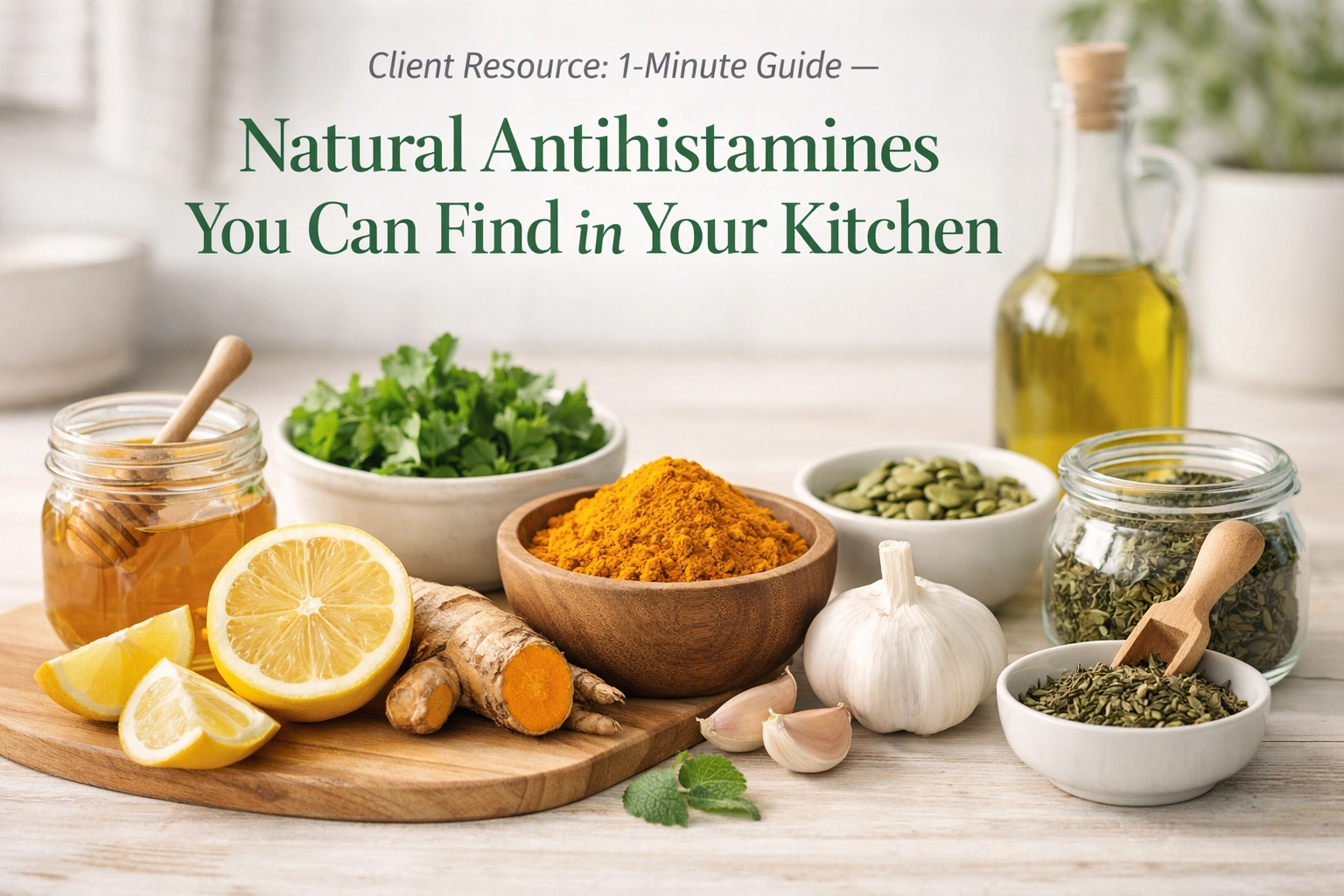
Allergy season in the Mid-South is notoriously difficult. For residents in Collierville, Germantown, Memphis, and Arlington, the transition between seasons often brings a surge in pollen counts that triggers a cascade of inflammatory responses. While many individuals reach for over-the-counter medications to suppress symptoms, these often come with side effects like drowsiness, dry mouth, or a "rebound" effect once the medication wears off.
At The Fatigue Clinic, we approach health through the lens of functional medicine, which means identifying the root causes of inflammation rather than just masking the symptoms. Histamine is a chemical your immune system makes to help your body get rid of something that’s bothering it: like pollen. However, when the "histamine bucket" overflows, you experience the classic signs of allergies: sneezing, itching, and fatigue.
You can often manage this "bucket" by using items already found in your pantry and refrigerator. This guide provides a direct, science-backed overview of natural antihistamines that can help stabilize your immune system.
If you are in a hurry, focus on these five categories to reduce your histamine load immediately:
For a deeper understanding of how these ingredients function at a cellular level, continue reading below.
Turmeric (Curcumin)
Turmeric is perhaps the most well-studied spice in functional medicine. The active compound, curcumin, has been shown to prevent the release of histamine from mast cells. Mast cells are the primary storage sites for histamine in the human body. When curcumin stabilizes these cells, it prevents the initial allergic trigger.
Ginger
Ginger serves as a potent H2 antagonist. Research indicates that ginger extract can be as effective as certain pharmaceutical antihistamines, such as Loratadine, in reducing symptoms of allergic rhinitis.
Thyme
Thyme contains high concentrations of Vitamin C and anti-inflammatory flavonoids. It acts as an expectorant, helping to clear mucus from the airways while simultaneously blocking the release of histamine.
Ceylon Cinnamon
Cinnamon contains cinnamaldehyde, an organic compound that may alleviate itching and congestion. It is particularly useful for individuals experiencing the "brain fog" often associated with high histamine levels.

Apples and Berries
These fruits are high in quercetin, a plant pigment (flavonoid) that is one of nature’s most effective antihistamines. Quercetin acts as a natural "brake" on the immune system, preventing it from overreacting to environmental triggers like ragweed or tree pollen in the Memphis and Germantown areas.
Onions (Specifically Red Onions)
Red onions are another top source of quercetin. While they are a common kitchen staple, their medicinal value for allergy sufferers is often overlooked.
Broccoli and Citrus Fruits
Vitamin C is a natural antihistamine that works by destroying the molecular structure of histamine itself. It also supports the DAO (Diamine Oxidase) enzyme, which is responsible for breaking down histamine in the gut. If your gut health is compromised, your DAO levels may be low, leading to increased sensitivity.
Pineapple (Bromelain)
Pineapple contains bromelain, an enzyme that reduces swelling and inflammation, particularly in the sinuses. It is frequently used in functional medicine protocols to treat sinusitis caused by allergies.
Celery and Parsley (Luteolin)
Both celery and parsley contain luteolin, a flavonoid that is a powerful mast cell stabilizer. It helps prevent the "degranulation" of mast cells, which is the process that releases histamine into the bloodstream.
Local Honey
While the scientific community continues to debate the specific mechanisms, many patients find relief by consuming locally sourced honey. The theory is that honey contains trace amounts of local pollen, which acts as a form of natural immunotherapy, gradually desensitizing the immune system to the environment.
For many patients at The Fatigue Clinic, allergies are more than just a nuisance; they are a significant drain on energy reserves. When the immune system is in a constant state of "high alert" due to histamine, it consumes a massive amount of cellular energy. This contributes to the debilitating tiredness often diagnosed as chronic fatigue.
By incorporating these natural antihistamines, you reduce the workload on your immune system. This allows your body to redirect that energy toward healing and daily function. This is a core component of protecting yourself and building your immune system for real health changes.
While kitchen remedies are an excellent first line of defense, chronic allergy symptoms often point to deeper issues. At our clinic in Collierville, we investigate the root cause of immune dysfunction. This may include:
If you find that dietary changes are not enough to manage your symptoms, it may be time to consult a functional medicine doctor in Memphis. Our approach focuses on why traditional doctors might be missing your root cause.
The Fatigue Clinic is located in Collierville and serves the communities of Germantown, Memphis, and Arlington. We specialize in helping patients regain their vitality through targeted, holistic interventions.
Call 901-221-8621 to schedule an appointment and discover how we can help you move past seasonal allergies and chronic fatigue.
| Category | Item | Key Compound | Benefit |
|---|---|---|---|
| Spice | Turmeric | Curcumin | Stabilizes mast cells |
| Spice | Ginger | 6-gingerol | H2 Antagonist; reduces rhinitis |
| Fruit | Apple | Quercetin | Natural "brake" for immune system |
| Fruit | Pineapple | Bromelain | Reduces sinus swelling |
| Vegetable | Red Onion | Quercetin | Builds baseline protection |
| Vegetable | Broccoli | Vitamin C | Breaks down histamine molecules |
| Herb | Thyme | Vitamin C/Flavonoids | Clears airways; blocks histamine |
| Herb | Parsley | Luteolin | Prevents histamine release |
For more resources on managing your health naturally, visit our Client Resources page or explore our educational services.
Stop settling for "managing" symptoms. Start addressing the root cause.
Call 901-221-8621 to reserve your spot for a consultation today!