
528 Hz music is a non-invasive relaxation tool that may help reduce short-term stress and support a calmer transition to sleep. Early studies suggest possible effects on cortisol, autonomic nervous-system activity, and mood. However, the evidence remains limited. 528 Hz music is not proven to repair DNA, cure disease, or replace medical treatment.
Music has been used for relaxation, ritual, and emotional regulation for thousands of years. Modern research now examines how tempo, pitch, rhythm, and personal preference affect the nervous system.
The 528 Hz frequency has received special attention through wellness articles, including “10 Amazing Benefits Of 528 Hz Music (Body and Mind Effects)” by Kai Riverstone, published in April 2025. A responsible review separates the promising findings from claims that remain unproven.
The Fatigue Clinic is located in Collierville and serves Germantown, Memphis, Arlington, and surrounding areas. Our functional and holistic approach includes sound and vibration-based services designed to support relaxation and nervous-system recovery.

Hertz (Hz) measures frequency, or the number of sound-wave cycles per second. A 528 Hz tone vibrates at 528 cycles per second.
Music labeled “528 Hz” usually means that the music has been tuned or designed to emphasize a 528 Hz tone. It does not mean that every sound in the recording is exactly 528 Hz.
The frequency is often grouped with the so-called Solfeggio frequencies, a collection of tones promoted in spiritual and wellness traditions. The phrase “love frequency” is commonly associated with 528 Hz.
That label is cultural and symbolic. It is not a medical diagnosis or a scientific measurement of healing.
Music can affect the body through several pathways. It may influence breathing, heart rate, muscle tension, attention, emotional memory, and the autonomic nervous system (the system that regulates automatic functions such as heart rate and digestion).
Use 528 Hz as a calming sound option, not as a stand-alone medical treatment.
Stress activates the sympathetic nervous system, often called the “fight-or-flight” response. A prolonged stress response can affect sleep, digestion, mood, blood pressure, and energy regulation.
Research on music in general shows that listening may reduce perceived stress and influence stress-related physiological markers. A systematic review and meta-analysis found that music interventions can support improvements in stress-related outcomes.
Research specific to 528 Hz is smaller but encouraging. A 2018 study compared music tuned to 528 Hz with the same music tuned to 440 Hz. The 528 Hz session was associated with changes in salivary cortisol, oxytocin, and self-reported tension and anxiety.
The study was small. It does not prove that 528 Hz works for everyone. It does show why researchers continue to investigate specific sound frequencies.
A 2026 randomized controlled trial involving 162 young adults also found that 20 minutes of 528 Hz instrumental music changed certain salivary biomarkers, including BDNF and CREB. These markers are involved in neuroplasticity and brain signaling. The study did not show an immediate improvement in Stroop-test performance, a measure of attention and cognitive interference.
The practical conclusion is simple: 528 Hz music may help the body move toward relaxation, especially when combined with quiet breathing and a comfortable environment.
Listen at a comfortable volume for 10 to 20 minutes. Stop if the sound causes discomfort, headache, anxiety, or sensory overload.
Sleep requires a shift away from alertness and toward physiological recovery. Bright light, work stress, pain, worry, and irregular schedules can interfere with that transition.
Calming music may help by slowing breathing, reducing mental stimulation, and creating a consistent bedtime cue. A relaxing track can become part of a predictable sleep routine.
The evidence for 528 Hz specifically and sleep quality is limited. Small studies have reported improved relaxation and sleep-related outcomes, but larger clinical trials are needed. The strongest evidence currently supports calming music as a broader category rather than proving that 528 Hz is uniquely effective.
Use this practical routine:
Do not use 528 Hz music to ignore persistent insomnia, sleep apnea symptoms, severe anxiety, or unexplained fatigue. Seek appropriate medical evaluation when sleep problems continue.
Create a consistent evening routine and measure how your sleep responds.

Music engages brain regions involved in emotion, memory, reward, and attention. Personal preference also matters. A song that feels calming to one person may feel distracting or unpleasant to another.
The 528 Hz studies that measured mood have reported reductions in tension and anxiety after short listening sessions. These results are preliminary, but they fit with broader research showing that music can influence emotional state.
Emotional balance does not mean feeling positive all the time. It means having more ability to notice emotions, regulate reactions, and return to a steady state after stress.
Pair 528 Hz music with a simple regulation technique:
Use sound to support emotional regulation, and contact a qualified professional when anxiety, depression, or trauma symptoms interfere with daily life.
Stress can make it difficult to think clearly. Worry consumes attention. Poor sleep reduces concentration. Persistent physical symptoms can also create cognitive fatigue.
A calming sound environment may help reduce distractions and make it easier to focus on one task. This is an indirect effect. When the nervous system is less activated, many people find it easier to organize thoughts.
Current research does not establish that 528 Hz music directly improves intelligence, memory, executive function, or cognitive performance. The 2026 randomized trial found biomarker changes but no significant difference in immediate Stroop-test performance.
The most accurate statement is this:
528 Hz music may support perceived mental clarity by reducing stress, but direct cognitive enhancement has not been proven.
Use it during a quiet breathing session, gentle stretching, journaling, or a short rest period. Do not listen while driving or during activities that require full attention.
Functional Medicine looks at relationships among body systems, lifestyle, environment, and individual health history rather than focusing only on isolated symptoms.
Stress and poor sleep can interact with digestion, immune function, pain sensitivity, hormonal regulation, and energy levels. A functional medicine plan may therefore include strategies that support sleep and nervous-system regulation alongside nutrition, testing, movement, and other individualized care.
This is why sound and vibration-based tools can fit within a holistic plan. They are not intended to treat the root cause by themselves. They can provide a structured period of rest while broader contributors are evaluated.
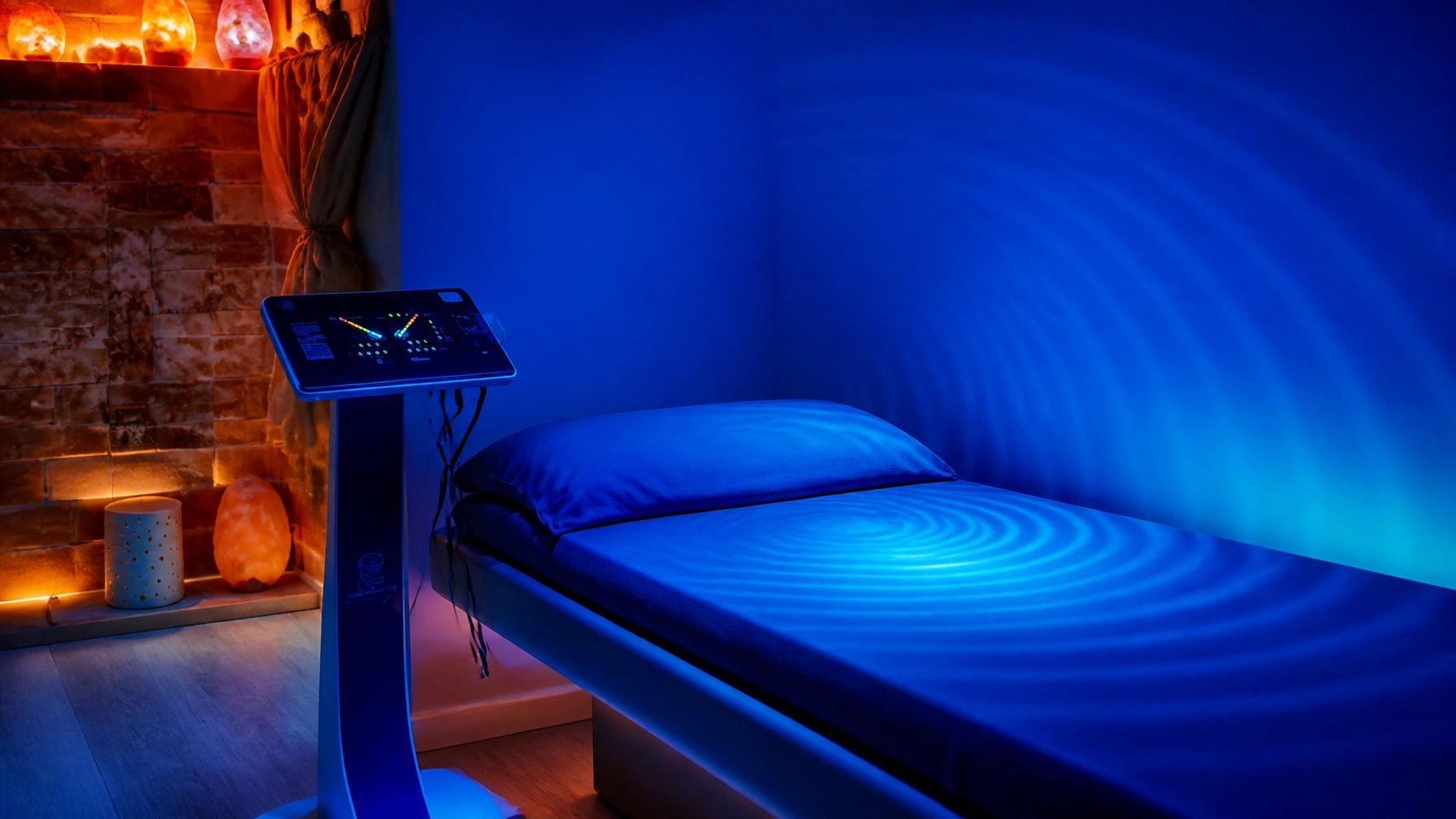
The Fatigue Clinic offers BioAcoustic Mat Therapy for $65 for a 30-minute session. The clinic uses an acoustic mat with sound-based tracks designed around Delta, Alpha, Beta, and Gamma brain-wave ranges.
Biofeedback at The Fatigue Clinic uses an acoustic mat. The experience is simple and relaxing. There are no physical connections to the patient. The approach is based on Dr. Bartel’s research.
The acoustic mat is different from simply playing a 528 Hz track through a phone. It is a clinic-based sound and vibration experience designed to support relaxation in a controlled setting.
Learn more about the clinic’s Services, including the BioAcoustic Mat Therapy session.
Call 901-221-8621 to ask whether an acoustic mat session fits your individualized care plan.

Popular 528 Hz content often includes claims about DNA repair, cellular regeneration, heart-chakra activation, spiritual transformation, or manifesting love.
These claims are not established medical benefits. Human clinical research has not proven that listening to 528 Hz music repairs DNA, reverses disease, activates a chakra, or attracts a specific relationship.
Some laboratory and animal studies have explored how sound exposure may affect cells, oxidative stress, or behavior. These findings cannot be treated as proof of a clinical benefit in humans.
Do not delay evaluation or treatment for autoimmune disease, neurological symptoms, digestive problems, endocrine concerns, chronic fatigue, pain, or sleep disorders because of sound-frequency claims.
Use 528 Hz music as a low-risk relaxation practice when it feels comfortable.
Patients seeking functional medicine Memphis support or a holistic doctor Memphis TN can contact The Fatigue Clinic in Collierville. The clinic serves Memphis, Germantown, Arlington, and surrounding communities with individualized functional and integrative care.
Call 901-221-8621 to schedule a consultation or ask about BioAcoustic Mat Therapy.