
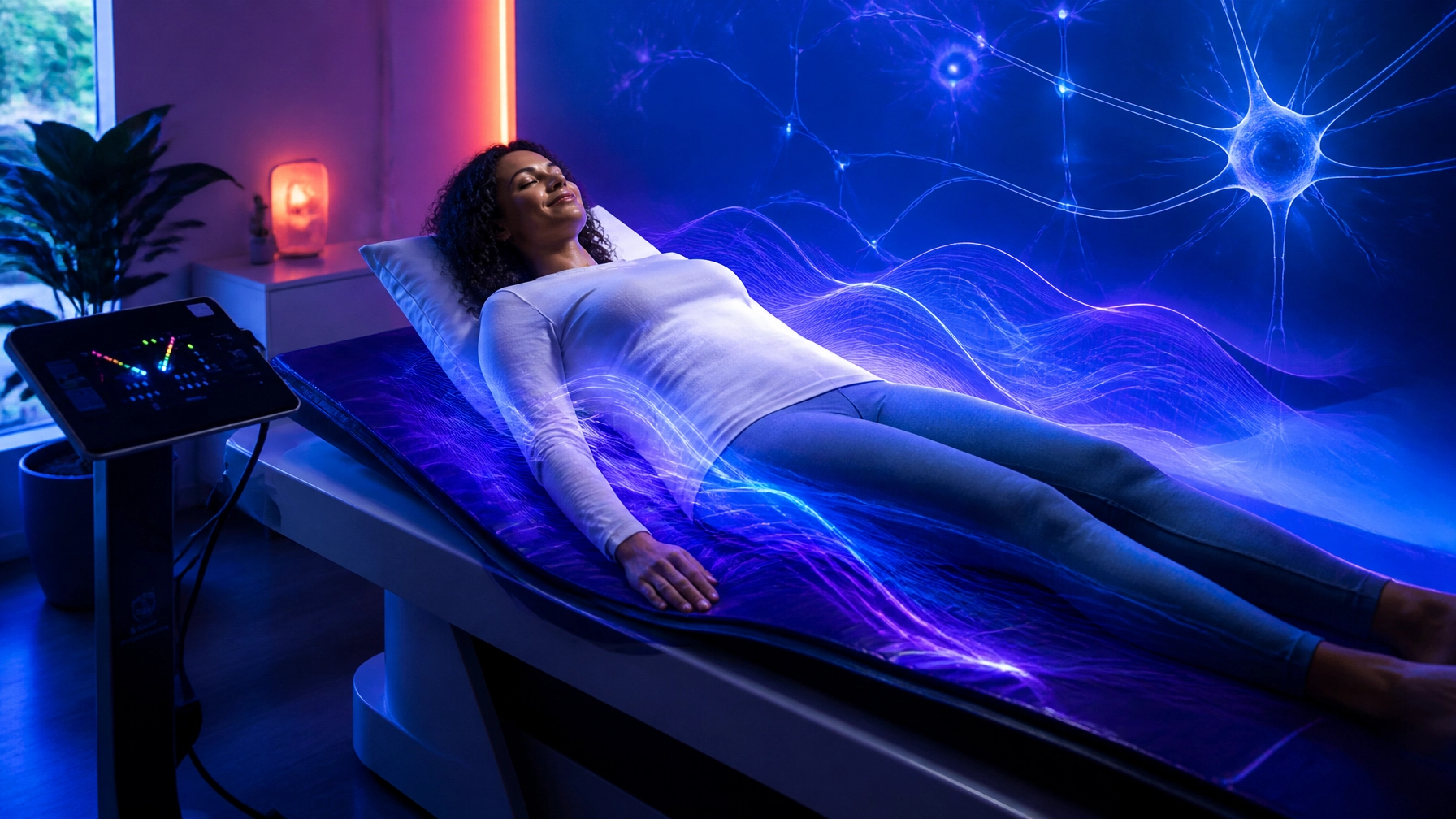
Brain health has become a major focus of modern medicine as more people experience chronic fatigue, brain fog, mood changes, neurological symptoms, and slower cognitive recovery. BDNF supports the brain’s ability to learn, adapt, and repair. Transcranial Magnetic Stimulation (TMS) and Pulsed Electromagnetic Field (PEMF) therapy both use magnetic energy, but they are different technologies. TMS is a specialized, targeted brain-stimulation treatment. PEMF is a non-invasive therapy that exposes the body to pulsed electromagnetic fields. Research into brain-specific PEMF outcomes is still evolving. The Fatigue Clinic offers PEMF as part of an individualized functional and integrative medicine plan in Collierville, serving Germantown, Memphis, Arlington, and surrounding areas.
For centuries, healthcare providers have searched for better ways to support the nervous system without surgery or long-term medication dependence. Today, researchers are studying neuroplasticity, cellular signaling, inflammation, and the biological factors that influence recovery.
One molecule is central to this discussion: brain-derived neurotrophic factor, or BDNF.
BDNF is a protein that helps nerve cells grow, connect, function, and survive. It supports the communication pathways that allow the brain to learn, remember, regulate mood, and adapt after stress or injury.
BDNF is often described as “fertilizer for the brain.” This comparison is useful because BDNF helps create an environment where neurons can develop stronger connections.
BDNF supports:
Neuroplasticity is the brain’s ability to change its structure and function in response to learning, activity, injury, and environmental conditions. BDNF is one of the important biological signals involved in this process.
Researchers have found associations between altered BDNF levels and conditions such as depression, Alzheimer’s disease, Parkinson’s disease, multiple sclerosis, and cognitive symptoms after trauma. However, BDNF is only one part of a complex system. A blood BDNF measurement does not provide a complete measurement of BDNF activity inside the brain.
Magnetic stimulation is being studied because magnetic fields can influence electrical activity and cellular signaling in nervous tissue.
Research has explored several possible mechanisms:
A 2025 editorial by Yavor Yalachkov and Soheila Karimi-Abdolrezaee in Frontiers in Neurology discussed neuroplasticity in multiple sclerosis and the role of biological repair mechanisms. It is important to describe this publication accurately. It was an editorial, not a new clinical trial proving that magnetic stimulation increases BDNF in every patient.
Other studies have examined TMS, BDNF, and cognitive recovery. For example, a 2025 Frontiers in Neurology study involving ischemic stroke patients reported higher peripheral BDNF and improved cognitive test results after a course of high-frequency TMS compared with sham stimulation. These results are encouraging, but they do not establish that every magnetic therapy produces the same outcome.

TMS and PEMF are sometimes discussed together because both involve electromagnetic energy. They must not be treated as interchangeable.
Transcranial Magnetic Stimulation (TMS) uses a specialized coil positioned near the head. It delivers focused magnetic pulses to influence specific brain regions. TMS is generally administered through a structured medical protocol for particular clinical indications.
Pulsed Electromagnetic Field (PEMF) therapy uses pulsed electromagnetic fields delivered through an applicator, mat, or similar system. The treatment is non-invasive and does not require surgery, implants, or medication. PEMF protocols can vary substantially in frequency, intensity, duration, and body placement.
The evidence supporting TMS for certain conditions is more established than the evidence supporting brain-specific PEMF. PEMF should not be presented as a replacement for TMS, emergency neurological care, rehabilitation, or prescribed treatment.
PEMF research includes cell studies, animal studies, small human studies, and narrative reviews. Early findings suggest that some PEMF protocols may influence biological processes connected to nervous-system health.
Researchers are investigating whether PEMF may:
In laboratory models, PEMF has been associated with increased BDNF release and activation of pathways such as BDNF/TrkB/Akt. Animal research has also examined PEMF in models of stroke, oxidative stress, neuroinflammation, and cognitive decline.
Human research is more limited. Some small studies have reported changes in BDNF, mood, or cognitive performance after electromagnetic therapies. These results are useful for guiding future research, but they do not prove that PEMF prevents Alzheimer’s disease, reverses Parkinson’s disease, treats multiple sclerosis, or restores memory in every patient.
The strongest responsible conclusion is that PEMF is a promising area of research, not a proven stand-alone treatment for cognitive disease.
Magnetic therapies are being studied in connection with several neurological and cognitive concerns.
BDNF is involved in mood regulation and neural adaptation. TMS has established clinical applications for certain forms of depression. PEMF research is also exploring mood and sleep outcomes, but the evidence remains preliminary.
BDNF supports synaptic communication and memory pathways. Experimental electromagnetic therapies have been studied for neuroprotection, inflammation, and cognitive performance. PEMF is not a cure for Alzheimer’s disease and should only be considered as part of a medically supervised plan.
BDNF may help support the survival and function of dopamine-producing neurons. Magnetic stimulation is being investigated in relation to movement, neuroplasticity, and motor rehabilitation. Patients require ongoing neurological care and should not delay standard treatment.
MS involves immune activity, nerve damage, and changes in the brain’s ability to compensate. Neuroplasticity and rehabilitation are important areas of MS care. PEMF may be considered for supportive wellness goals, but it does not replace disease-modifying therapy or neurological monitoring.
After a concussion or traumatic brain injury, patients may experience fatigue, sleep disruption, headaches, mood changes, and difficulty concentrating. Medical evaluation is essential. PEMF may be discussed as a complementary therapy only after appropriate assessment.
TMS and PEMF research has examined BDNF, motor relearning, cognition, and rehabilitation. Stroke recovery requires urgent medical care followed by individualized rehabilitation. Complementary therapies must be coordinated with the patient’s medical team.
Call 901-221-8621 to discuss whether PEMF may fit your individualized care plan.
Brain fog and cognitive fatigue can have multiple contributors. These may include poor sleep, chronic inflammation, digestive dysfunction, nutrient deficiencies, blood-sugar instability, thyroid imbalance, immune dysregulation, medication effects, stress physiology, or recovery after infection.
A functional medicine approach evaluates the whole person instead of focusing on one symptom in isolation. Functional Medicine is a biology-based approach that looks for contributing factors and creates an individualized plan to address them.
The Fatigue Clinic offers a 30-minute PEMF therapy session for $55, according to the clinic’s current Services information. The session exposes the body to pulsed electromagnetic fields that may influence ion and electrolyte movement in tissues and fluids.
PEMF may be combined with other services when clinically appropriate, including nutritional education, functional medicine evaluation, IV therapy, injections, red light therapy, laser therapy, and sleep-support strategies.
Review the full Functional and Holistic Medicine Services in Collierville before scheduling. Treatment selection depends on medical history, current symptoms, medications, implanted devices, neurological diagnoses, and individual goals.

PEMF is non-invasive and drug-free, but “non-invasive” does not mean appropriate for everyone.
Tell the clinic about:
Do not use PEMF to delay emergency care. Seek immediate medical attention for sudden weakness, facial drooping, trouble speaking, severe headache, chest pain, loss of consciousness, or sudden confusion.
Long-term data on repeated, high-intensity, brain-directed PEMF in humans remain limited. A qualified provider must review the specific device, treatment location, intensity, and patient history.
BDNF helps the brain build and maintain healthy connections. TMS research provides meaningful evidence that targeted magnetic stimulation can affect brain networks and may influence BDNF in certain settings.
PEMF is different. It is a non-invasive, drug-free therapy with promising biological research and limited human evidence for brain-specific outcomes. It may support a broader plan for relaxation, sleep, recovery, circulation, and cellular wellness, but it is not a guaranteed cognitive enhancer or cure for neurological disease.
The Fatigue Clinic is located in Collierville and serves patients from Germantown, Memphis, Arlington, and surrounding areas. Work with a holistic doctor Memphis TN patients can access for an individualized plan that considers sleep, nutrition, inflammation, digestion, endocrine health, neurological symptoms, and other root-cause factors.
Call 901-221-8621 to schedule a consultation or ask about a 30-minute PEMF therapy session.