
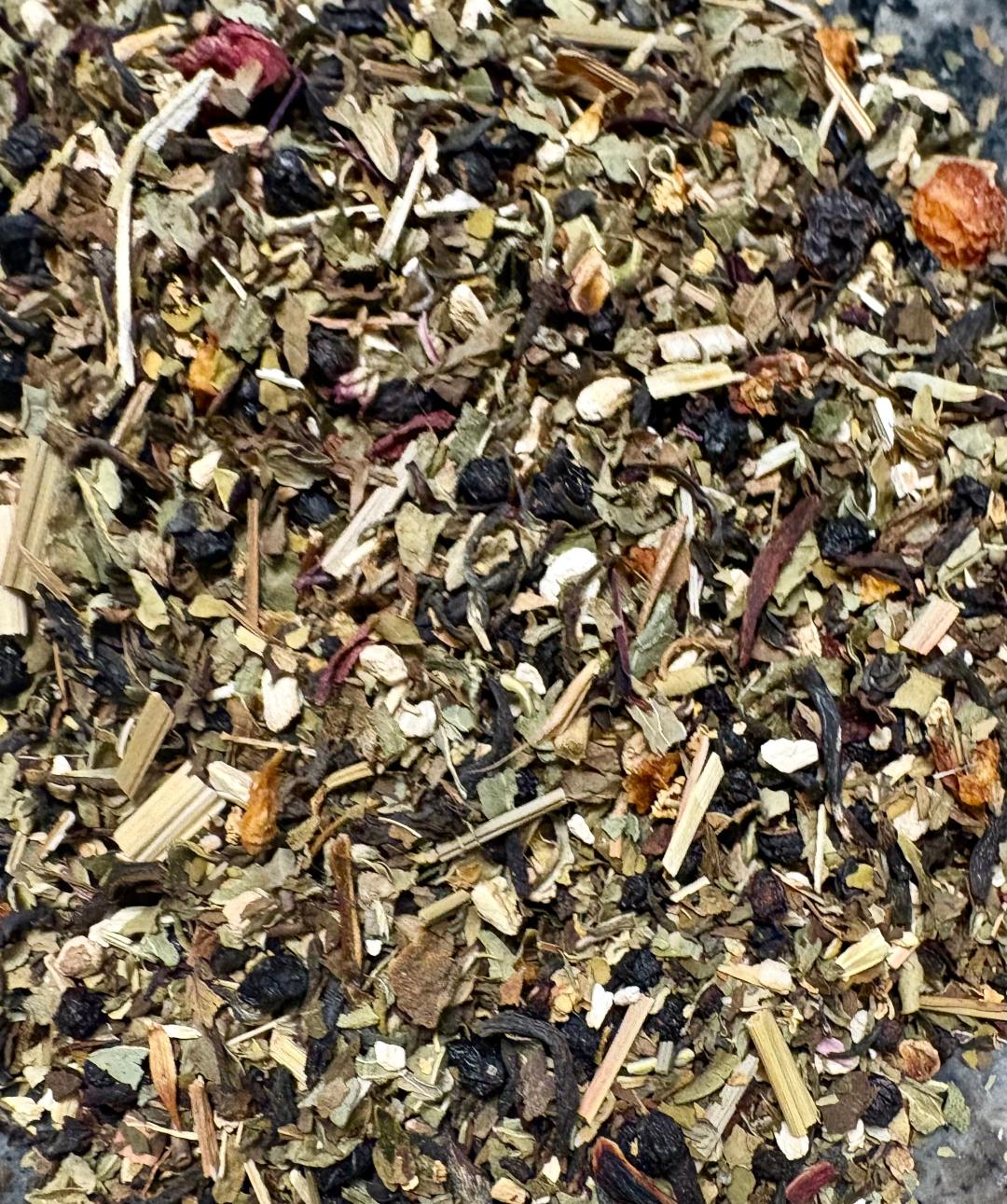
Late October in Tennessee brings more indoor time, shorter days, and routines that can slip. A steady daily ritual can support everyday wellness, but no tea should be presented as a way to prevent or treat cold or flu. The Fatigue Clinic’s handcrafted, organic Immune Tea is a naturally caffeine-free beverage made with four herbs. Persistent unexplained fatigue deserves a closer look, not a tea alone.
A seasonal moment to reset routines
As cold-and-flu season gets underway, many people look for simple ways to care for everyday wellness. Rest, hydration, regular meals, and consistent routines remain practical foundations. A warm mug of herbal tea can be part of that routine.
The Immune Tea Blend from Touch of Herbs and Beyond contains exactly four herbs: echinacea, ashwagandha, lemon balm (Melissa officinalis), and nettle leaf (Urtica dioica). The blend is a beverage, not a supplement. It is handcrafted and organic, and naturally caffeine-free.
Its purpose is to support the immune system, support the body’s natural defenses, and support everyday wellness. It is not a substitute for medical advice or a way to prevent or treat an illness.

Echinacea has a history of traditional use and moderate evidence for supporting the immune system. Research on echinacea products and cold outcomes is mixed. Preparations differ in plant species, parts, and processing, so results for one product do not establish results for another. The Cochrane review found that the evidence was varied and did not support strong conclusions about cold outcomes. The National Center for Complementary and Integrative Health (NCCIH) also notes that findings are not conclusive.
Ashwagandha is traditionally described as an adaptogen, a term for an herb used to support the body’s response to everyday stress. Human research on standardized extracts has examined stress and cortisol measures, with study doses commonly in the range of 125–600 mg per day. Those concentrated extracts are not equivalent to a cup of tea. The available evidence does not establish an immune effect from ashwagandha.
Lemon balm has been studied for calm mood and subjective sleep quality. A systematic review in Phytotherapy Research examined clinical trials involving lemon balm, but studies used preparations such as concentrated extracts, not the tea infusion in this blend. Read the review for details.
Nettle leaf is a mineral-rich herb containing iron, calcium, magnesium, and silica. Early laboratory research has examined nettle in relation to histamine H1 receptors and mast cells. That research is preliminary and limited; it does not establish an effect from drinking nettle tea.
The approximate amount of herbs used for a cup of tea is far below the concentrated extract amounts used in many studies. Evidence about an individual herb or extract cannot be assumed to apply to this four-herb tea. The blend is best understood as a traditional beverage that may support everyday wellness and the body’s natural defenses, not as a proven way to alter seasonal illness outcomes.

Read this section before brewing. The blend contains herbs that may be unsuitable for some people or may interact with medicines. Ashwagandha and lemon balm are both thyroid-active herbs, so the cautions below are important. If you have a health condition, take medication, or are unsure whether this blend is appropriate for you, check with your healthcare provider before use.
For adults who have reviewed the safety information and confirmed the blend is appropriate for them:

A warm drink can make hydration and a regular pause easier to build into a day. It cannot replace individualized evaluation. If chronic fatigue, unexplained fatigue, or brain fog is persistent, it deserves a closer look rather than reliance on tea alone.
At The Fatigue Clinic, functional medicine is a biology-based methodology for looking at patterns and context. It is not a promise that one product or one approach will resolve a complex concern. People searching for functional medicine Memphis, holistic medicine Memphis, or functional medicine Tennessee can learn about the clinic’s services. The clinic’s approach is built around listening to the full story and investigating what deserves a closer look. The brand line says it plainly: “You finally have time to tell us the whole story.”
For a holistic provider in Memphis TN, The Fatigue Clinic is located in Collierville and serves Germantown, Memphis, Arlington, Eads, and surrounding areas. The clinic has served the community for over 16 years.
Learn more about the Immune Tea Blend or browse the Herbals & Teas collection.
The Fatigue Clinic is at 890 West Poplar Ave, Ste 6, Collierville, TN 38017. Its six-step pathway is Understand Your Story, Look at the Patterns, Identify What Deserves a Closer Look, Understand the Data, Build Your Strategy, and Reassess & Refine.
Call 901-221-8621 to learn more.
tea-tips-cold-flu-season-immune-teaThis content is for general educational purposes only and is not intended to diagnose, treat, cure, or prevent any medical condition. It is not a substitute for individual medical advice; always consult your own healthcare provider about your health and before making any changes to your care. Statements about herbal products have not been evaluated by the Food and Drug Administration and are not intended to diagnose, treat, cure, or prevent any disease.
This statement has not been evaluated by the Food and Drug Administration. This product is not intended to diagnose, treat, cure, or prevent any disease.