

For centuries, herbal teas have been used as part of daily wellness routines. Modern research now helps explain how specific plant compounds may interact with immune, inflammatory, nervous-system, and stress pathways. The Fatigue Clinic’s handcrafted Immune Tea combines only three herbs (echinacea, lemon balm, and nettles) to support general wellness. It is a supportive beverage, not a treatment or cure for chronic fatigue, autoimmune disease, infection, or any other medical condition.
People living with chronic fatigue or autoimmune conditions often need more than symptom-focused advice. They need a careful investigation of sleep, nutrition, immune balance, digestion, stress physiology, and other possible contributors. You finally have time to tell us the whole story. Herbal tea can be one small part of that larger wellness plan.
The Touch of Herbs and Beyond Immune Tea contains:
No elderberry, ginger, turmeric, or other herbs are listed as ingredients in this blend.
The Immune Tea is available in two sizes:
View the Immune Tea blend or explore the complete Herbals & Teas collection.
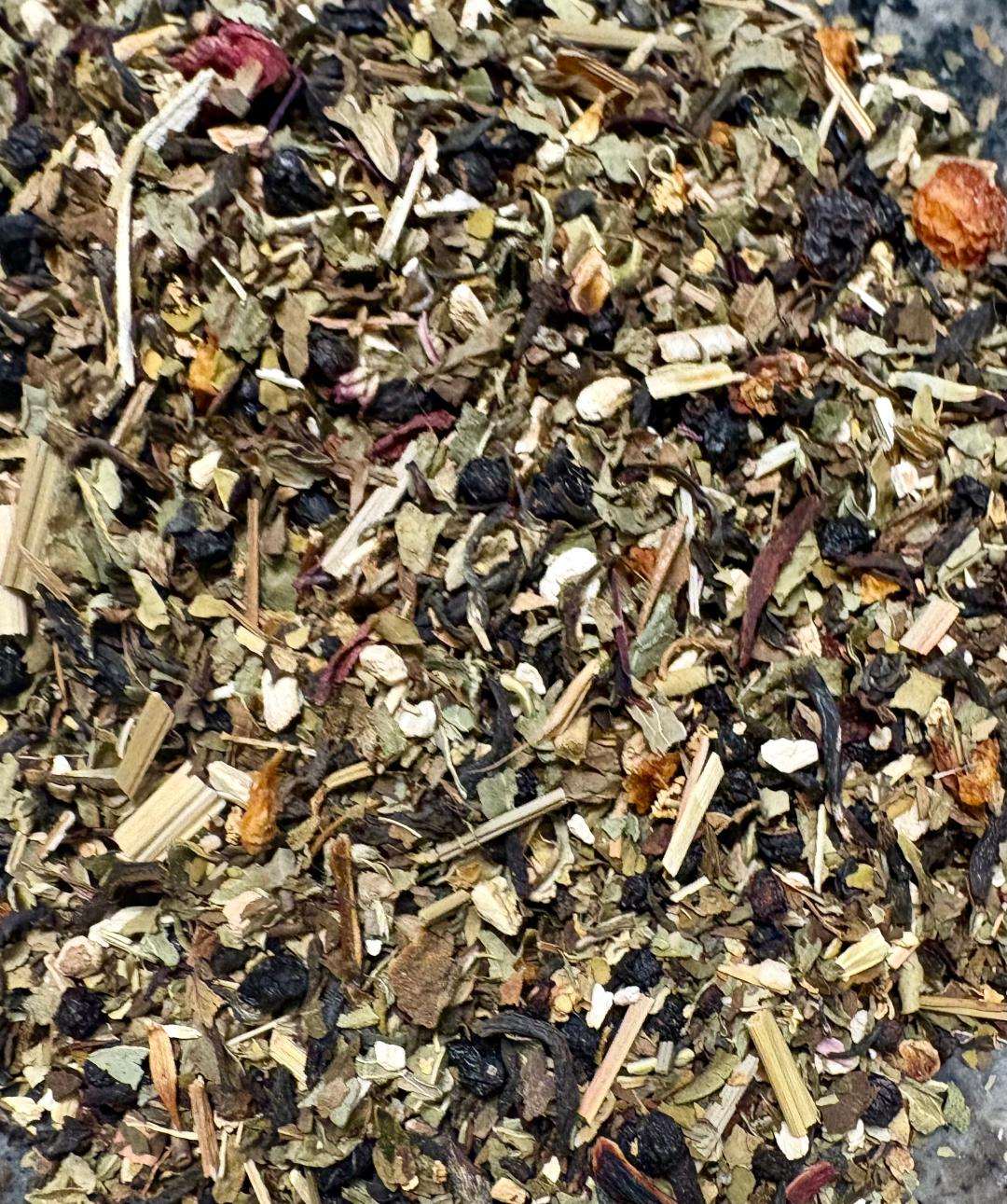
Echinacea is a botanical traditionally used for short-term immune support, especially during seasonal respiratory challenges. Its activity comes from multiple compounds rather than one single ingredient.
Two important compound groups are alkylamides and polysaccharides.
Alkylamides are lipid-soluble compounds found in echinacea. Laboratory research suggests that they interact with immune signaling and cannabinoid type-two receptors. These effects may influence inflammatory messengers, macrophage activity, and the body’s early response to external threats.
Polysaccharides are larger, water-soluble compounds. They may influence innate immune activity, including macrophage function and immune-cell communication. Innate immunity is the body’s rapid first-line defense system.
This process is known as immune modulation. Immune modulation means influencing immune activity rather than simply turning the immune system “on.” That distinction matters for people with autoimmune disease. An immune-supporting herb should not be treated as a universal immune booster.
Research summarized by the European Medicines Agency and published reviews indicates that echinacea evidence is strongest for short-term respiratory wellness. Evidence for chronic fatigue, post-viral fatigue, and autoimmune recovery remains limited.
Tea also differs from a standardized extract. Water may extract some polysaccharides, but alkylamides are more lipid-soluble. The amount of each compound in a cup of tea is not standardized. Do not assume that a cup of Immune Tea provides the same dose used in an echinacea research study.
For someone recovering from prolonged fatigue, echinacea may be viewed as an occasional wellness support. It should not replace evaluation for anemia, thyroid dysfunction, sleep disorders, nutrient deficiencies, infection, medication effects, or other contributors to unexplained fatigue.
Nettles, or Urtica dioica, are mineral-rich leaves that also contain flavonoids and phenolic compounds. These include quercetin-related compounds, although the amount available in a brewed cup depends on the plant material and preparation.
Quercetin is being studied for its effect on mast-cell activity. Mast cells are immune cells that release histamine and other inflammatory mediators. Histamine contributes to common allergy symptoms such as nasal irritation, itching, flushing, and watery eyes.
Laboratory studies suggest nettle extracts may influence histamine signaling, mast-cell degranulation, and inflammatory enzymes. Small human studies have examined nettle for seasonal allergy symptoms. The evidence is supportive but not strong enough to position nettles as a replacement for allergy evaluation or prescribed treatment.
Nettles also contain minerals such as calcium, magnesium, iron, potassium, and phosphorus. Mineral content varies by growing conditions, processing, and serving size. A cup of nettle tea is not a substitute for laboratory testing or a nutrition plan.
Seasonal allergies can worsen sleep quality and increase the daily burden of brain fog. For that reason, gentle allergy support may indirectly help a person maintain a more stable recovery routine. However, nettles do not treat the root cause of chronic fatigue or autoimmune disease.

Lemon balm, or Melissa officinalis, is a calming herb traditionally used for occasional stress and sleep support. Its best-known polyphenol is rosmarinic acid.
Research on lemon balm and rosmarinic acid has examined several pathways:
Sleep disruption is a common part of chronic fatigue. Persistent stress can also increase the physiological load on the nervous system. Lemon balm may support a calming evening routine, but it is not a treatment for insomnia, anxiety disorders, adrenal disease, or chronic fatigue syndrome.
For people with autoimmune conditions, improved sleep and stress regulation can be meaningful parts of a broader plan. The goal is not to use tea as a cure. The goal is to support daily habits while a qualified clinician investigates the larger health picture.
Prepare the blend according to the product directions. Use a clean brewing method and store the tea as directed on the package.
Because the blend contains echinacea and nettles, do not begin with the assumption that “natural” means risk-free. Start only after reviewing the ingredient list and your personal medical history with a qualified clinician.
Use Immune Tea as a wellness beverage, not as a substitute for:
The Fatigue Clinic takes a root-cause approach to complex health concerns. Learn more about our Services, including functional and integrative options designed around individual needs.
Review this herbal product with a clinician before use, especially if you have a chronic illness or take prescription medication.
Echinacea and autoimmune conditions: Echinacea may influence immune signaling. Regulatory guidance remains cautious for autoimmune disease, progressive immune conditions, organ transplantation, and significant immunosuppression. Discuss use with the clinician managing your condition before adding it.
Ragweed and Asteraceae allergies: Echinacea belongs to the Asteraceae family, which also includes ragweed, daisies, chrysanthemums, and marigolds. Avoid echinacea or seek specialist guidance if you have a known allergy to these plants. Stop use and seek urgent care for signs of a serious allergic reaction.
Immunomodulatory medication: Review echinacea with a clinician if you take biologic medications, immunosuppressants, transplant medications, or other drugs that intentionally alter immune activity.
Pregnancy and breastfeeding: Safety information is limited. Do not use this blend during pregnancy or breastfeeding without approval from your obstetric, primary-care, or pediatric clinician.
Blood thinners: Nettles and concentrated herbal products may affect medication safety or bleeding risk in some circumstances. Review the blend before use if you take warfarin, apixaban, rivaroxaban, aspirin, clopidogrel, or another blood-thinning medication.
Other medications: Bring the full ingredient list to a medication review. Herbal products can have effects that vary by preparation, serving size, and individual health history.
The Fatigue Clinic is located in Collierville, Tennessee, and serves Germantown, Memphis, Arlington, Eads, and surrounding areas.
Functional medicine means evaluating how body systems interact instead of viewing each symptom in isolation. In functional medicine Memphis, that may include reviewing digestion, nutrient status, immune patterns, endocrine function, sleep, stress physiology, and medication history.
People searching for a holistic doctor Memphis TN often want a provider who will listen to the full history. The Fatigue Clinic provides individualized care through a biology-based model. Susan Earl is an Acute and Critical Care Nurse Practitioner and IFM Certified Practitioner.
A holistic medicine provider should also explain the limits of supportive products. Immune Tea may complement a wellness routine, but it does not diagnose or treat disease. Use it as one practical habit within a comprehensive plan.
Call 901-221-8621 to discuss the Immune Tea blend or schedule a conversation about chronic fatigue, brain fog, or a broader Fatigue & Root-Cause Evaluation. Visit The Fatigue Clinic at 890 West Poplar Ave, Ste 6, Collierville, TN 38017.