
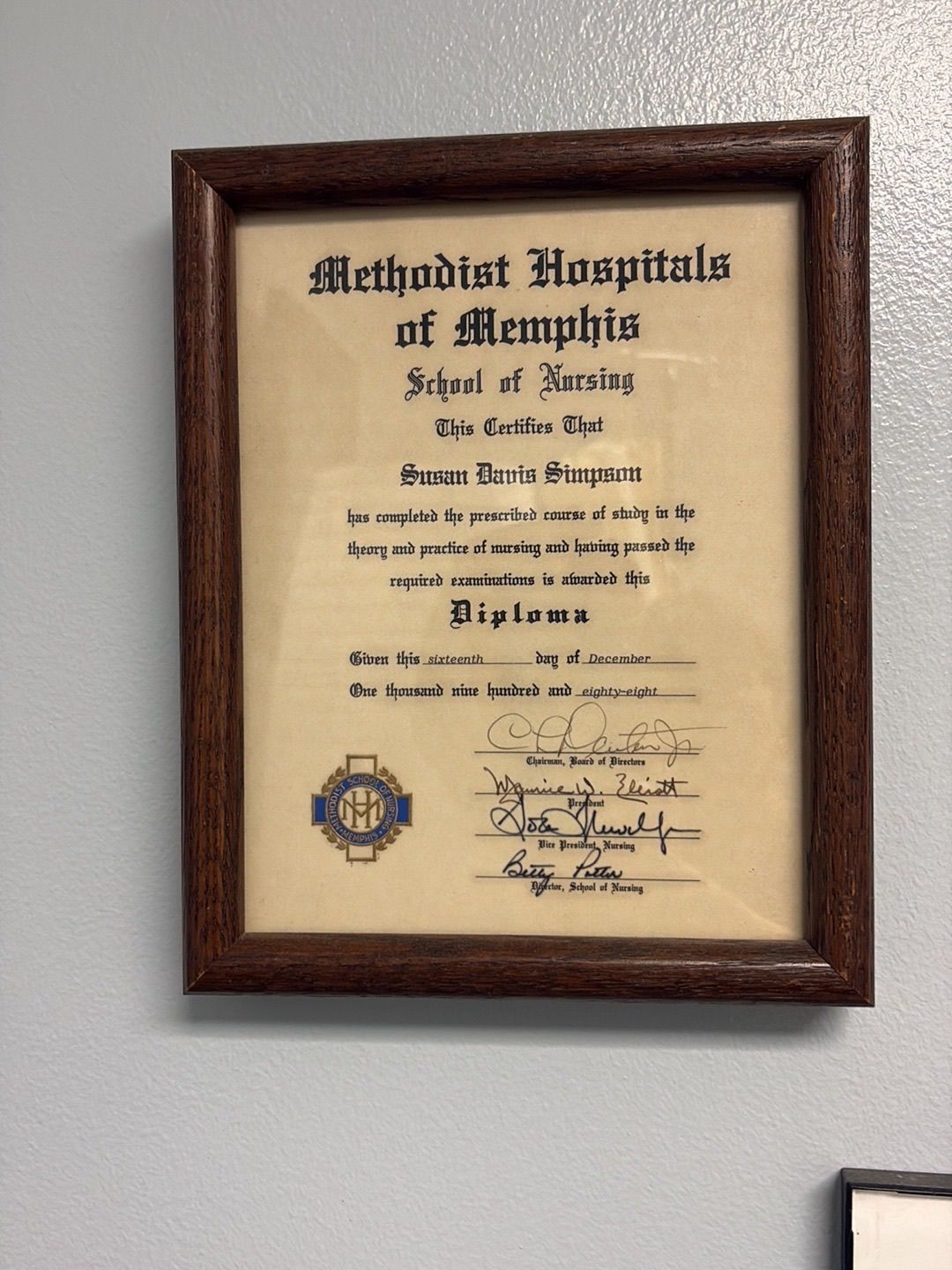
Choosing a healthcare provider requires more than reviewing a service menu or reading online reviews. An RN and an acute care nurse practitioner have different education pathways, licenses, clinical responsibilities, and legal authority. These differences matter when care involves IV therapy, medication management, chronic illness, or complex medical histories. The Fatigue Clinic is located in Collierville and serves Germantown, Memphis, Arlington, and surrounding communities. Call 901-221-8621 with questions about safe, credentialed care.
For generations, nursing credentials have helped patients understand who is qualified to provide care. Today, people may encounter healthcare workers offering home visits, opening office visits, administering IV treatments, or selling medications and supplements.
The important question is not whether someone appears experienced. The important question is whether that person has the education, license, certification, clinical authority, and oversight required for the service being offered.
A registered nurse (RN) is a licensed nursing professional who provides direct patient care. RNs assess patients from a nursing perspective, administer medications ordered by an authorized prescriber, monitor changes, educate patients, and coordinate care.
An acute care nurse practitioner (ACNP) is an advanced practice registered nurse (APRN) with graduate-level education and specialized training to evaluate, diagnose, and manage patients with complex or unstable conditions.
The two roles work together, but they are not interchangeable.
An RN generally implements and monitors a prescribed plan of care. An ACNP may develop the medical plan, order diagnostic testing, prescribe within state law, and manage treatment decisions.
The RN pathway begins with completion of an approved nursing program. Common options include:
The nursing program includes classroom instruction, laboratory education, and supervised clinical experiences. The exact number of clinical hours varies by school and state requirements.
After completing the program, the graduate must pass the NCLEX-RN examination. The individual must then obtain and maintain an active RN license through the applicable state board of nursing.
An RN may also earn optional specialty certifications. For example, an RN may pursue certification in critical care, emergency nursing, infusion nursing, or another specialty. These certifications demonstrate additional expertise, but they do not automatically give an RN authority to diagnose medical conditions or prescribe medications.
An active RN license does not provide independent prescriptive authority.
The ACNP pathway requires additional education beyond initial RN preparation.
Most candidates complete the following steps:
Graduate programs may award a Master of Science in Nursing (MSN), Doctor of Nursing Practice (DNP), or post-master’s certificate.
An ACNP program is not simply an RN refresher course. It includes advanced coursework in:
The ANCC Adult-Gerontology Acute Care Nurse Practitioner-Board Certified credential, commonly written as AGACNP-BC, requires an accredited graduate program and at least 500 faculty-supervised clinical hours specific to the adult-gerontology acute care NP role and population.
Those clinical hours are different from the clinical hours completed in an RN program. They also cannot be replaced simply by working additional hours as an RN.
Some graduate programs require more than the certification minimum. DNP programs may include 1,000 or more total practice hours, depending on the curriculum and degree requirements.

RN licensure and NP board certification serve different purposes.
The NCLEX-RN tests whether a graduate has the knowledge required for entry-level registered nursing practice.
An ACNP must pass a national specialty examination through an approved certifying organization. Common credentials include:
Board certification confirms that the provider has completed specialized graduate education and demonstrated knowledge in assessment, diagnosis, pharmacology, and acute care management.
Certification must also be maintained. Renewal generally requires continuing education and other professional requirements. Patients have the right to ask whether a provider’s license and certification are current.
Review the ANCC adult-gerontology acute care nurse practitioner certification requirements and the AACN ACNPC-AG certification information for current details.
Tennessee law distinguishes between RN practice and APRN practice.
An RN may administer medications and treatments under the order of an authorized prescriber. The RN monitors the patient, observes for side effects, documents the response, and reports concerns.
An RN does not independently:
An ACNP with the required Tennessee APRN authorization may perform advanced medical functions within the provider’s role, training, and legal scope.
In Tennessee, APRN prescriptive authority requires more than the letters “NP” after a name. The APRN must meet state requirements, including a Certificate of Fitness when applicable, and practice under the required written collaborative practice arrangement with a physician.
The agreement must define the APRN’s scope of practice and prescribing authority. Controlled-substance prescribing also involves additional state and federal requirements, including appropriate registration and compliance with applicable rules.
Because regulations can change, patients should verify current requirements through the Tennessee Board of Nursing.
IV therapy places medication, fluids, vitamins, or other substances directly into the bloodstream. This route bypasses many of the body’s normal protective processes and can produce rapid effects.
Safe IV therapy requires more than knowing how to insert an IV catheter.
A qualified clinical team must evaluate:
An RN may start an IV, administer an ordered infusion, monitor the patient, and report adverse reactions according to the organization’s policies.
An authorized NP or physician may evaluate the patient, determine whether the treatment is appropriate, order the therapy, and manage complications within the provider’s legal scope.
The Fatigue Clinic’s Infusion Center is staffed exclusively with licensed professionals. The clinic also provides custom infusions and injections designed around individual patient needs.
Ask who evaluates you, who orders the therapy, who administers it, and what emergency plan is in place.

Medication management involves more than handing a patient a product.
It includes selecting an appropriate medication, confirming the indication, reviewing interactions, adjusting the dose, monitoring laboratory results, and assessing whether treatment is working.
This is especially important for people with autoimmune disease, endocrine disorders, neurological symptoms, kidney disease, heart disease, or multiple prescriptions.
An RN has an essential role in medication safety. The RN verifies orders, administers medications, watches for adverse effects, and educates the patient.
An ACNP or physician with appropriate authority may diagnose, prescribe, adjust, and discontinue medications.
A person who is not authorized to prescribe cannot legally become a prescriber by offering medication during a home visit, opening an office, or selling products directly. Patients should receive clear information about the medication’s source, label, prescriber, dosage, expiration date, and follow-up plan.
Be especially cautious when someone:
These warning signs do not replace legal review, but they are important patient-safety concerns.
Functional medicine is a biology-based approach that evaluates how body systems interact and identifies contributing factors behind illness. It may consider immune, digestive, endocrine, neurological, metabolic, nutritional, and environmental factors.
Functional medicine does not eliminate the need for conventional diagnosis, emergency treatment, prescriptions, or specialist referrals.
Patients searching for functional medicine Memphis, functional medicine Memphis TN, holistic medicine Memphis, or a holistic doctor Memphis TN should verify the provider’s core license first. Additional training in integrative or holistic care should complement recognized medical education.
The Fatigue Clinic provides functional, integrative, and holistic services in Collierville, Tennessee, serving Germantown, Memphis, Arlington, and surrounding areas. Services include functional medicine evaluations, IV therapy, injections, nutritional education, PEMF therapy, light therapy, laser therapy, and other individualized treatments. Learn more through the clinic’s functional medicine services and complete services page.
Call 901-221-8621 before scheduling care and ask which licensed professional will evaluate and treat you.
Before receiving IV therapy, medication management, or complex chronic care, confirm:
Qualified care is transparent. Patients should never feel pressured to proceed before their questions are answered.
Contact The Fatigue Clinic at 901-221-8621 to discuss credentialed functional and integrative care in Collierville.